In modern electrical systems, ensuring safety against ground faults is paramount, and the zero sequence current transformer (ZCT) stands as a critical component in this defense. Also known as zero sequence CT, z current transformer, ground fault CT, or ground fault current transformer, this specialized device is designed to detect unbalanced currents that signal dangerous ground faults, protecting personnel, equipment, and infrastructure from catastrophic damage.
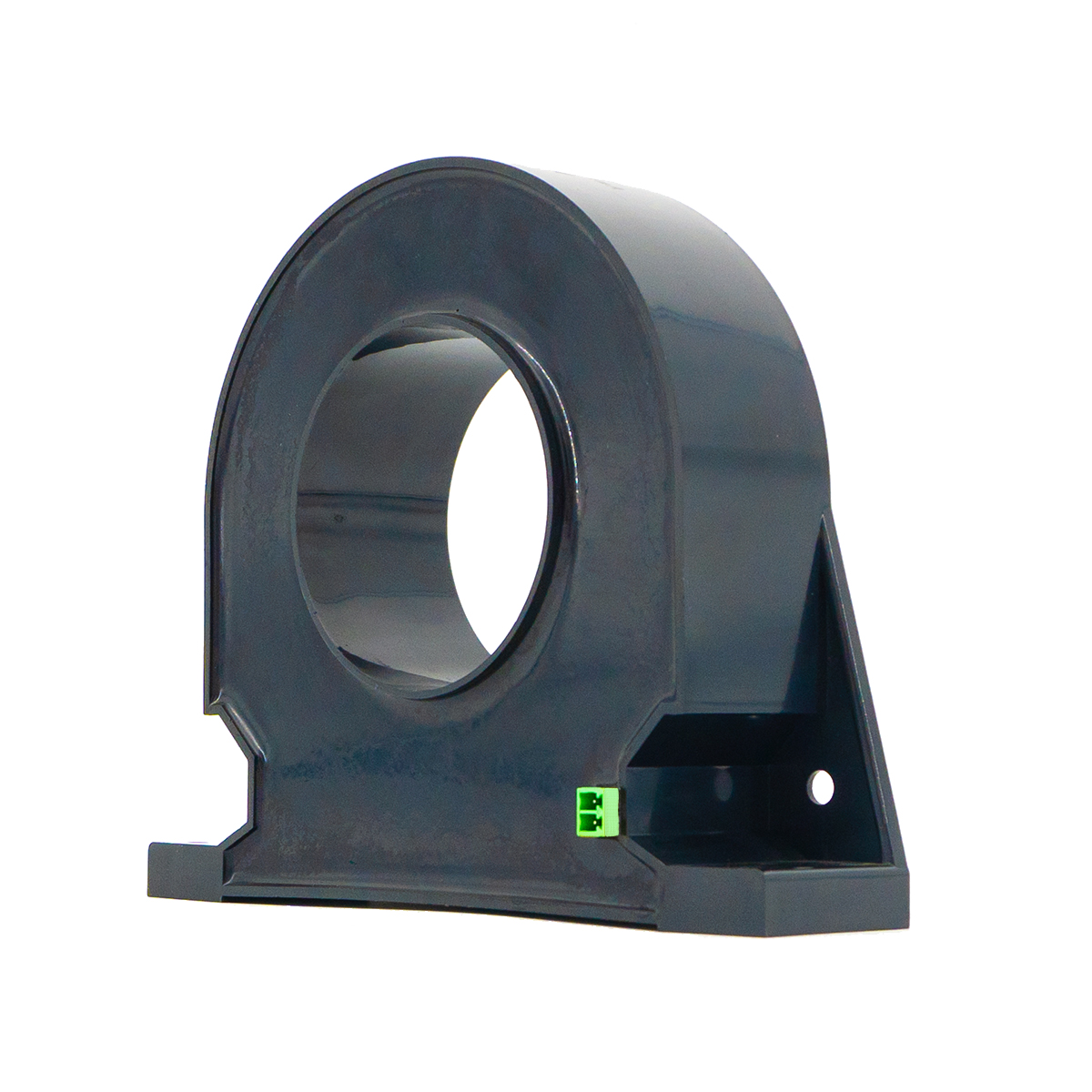
A zero sequence current transformer operates on the principle of vector current summation, a foundational concept for ground fault detection. In a balanced three-phase electrical system, the sum of the currents in all three phases equals zero, meaning no net current flows through the ground. However, when a ground fault occurs—such as insulation failure, accidental contact with the earth, or equipment malfunction—the system balance is disrupted, creating a zero sequence current that flows through the ground path.
The zero sequence CT, or ZCT, is typically constructed with a toroidal core through which all three phase conductors pass, with a secondary coil connected to protective relays. Unlike conventional current transformers that measure individual phase currents, the zero sequence current transformer monitors the total sum of the three phase currents. When a ground fault generates a zero sequence current, the core induces a corresponding signal in the secondary coil, triggering protective devices such as circuit breakers or alarms to isolate the faulty circuit promptly.
Ground fault CT, also referred to as ground fault current transformer, is essential for detecting even minimal leakage currents, often as low as a few milliamps, making it indispensable in high-voltage substations, industrial plants, commercial buildings, and residential complexes. The z current transformer’s high sensitivity ensures that even small ground faults are identified before they escalate into electrical fires, equipment damage, or electric shocks.
Proper installation and selection of the zero sequence CT are vital for reliable performance. Key considerations include matching the transformer’s turns ratio and accuracy class to the system requirements, avoiding magnetic interference from nearby high-current devices, and ensuring all phase conductors pass through the core uniformly. Neglecting these steps can reduce the zero sequence current transformer’s effectiveness, leaving the system vulnerable to undetected ground faults.
In summary, the zero sequence current transformer (ZCT)—whether called zero sequence CT, z current transformer, ground fault CT, or ground fault current transformer—is an irreplaceable tool for ground fault safety. By continuously monitoring current balance and alerting to anomalies, it forms the backbone of electrical safety systems, safeguarding lives and property while ensuring the stable operation of electrical infrastructure.


