
Views: 0 Author: Site Editor Publish Time: 2025-10-29 Origin: Site


Function | Description |
|---|---|
Fault Detection | Finds ground faults by checking for current problems in three-phase systems using the Zero Sequence Current Transformer. |
Rapid Isolation | Quickly stops faults and lowers accident risks. |
System Stability | Makes the system safer and more reliable. |
Power Quality | Helps keep the network balanced and saves energy. |
Zero-sequence current transformers (ZCTs) find ground faults fast. This helps keep people and equipment safe.
These transformers watch the balance of currents in three-phase systems. If the total current is not zero, there might be a fault.
Picking the right ZCT is very important. You should think about current ratio, sensitivity, and if it fits your system. This helps find faults well.
Checking and taking care of ZCTs often stops problems. This makes sure they work well and keeps your electrical system safe.
ZCTs can be used in many places. They work in factories, businesses, and renewable energy systems. This helps make power better and safer.
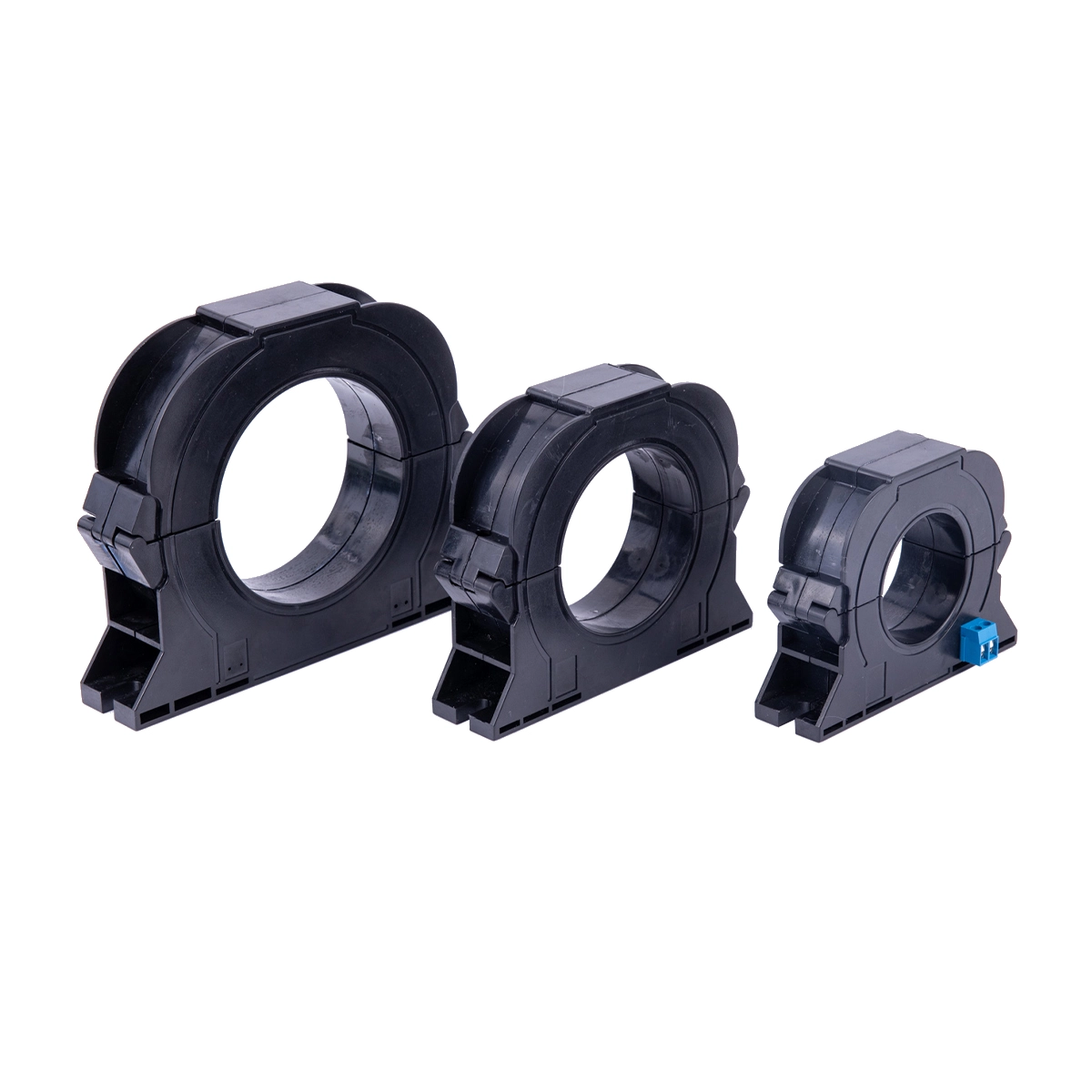
A zero-sequence current transformer is a device that helps find problems in electrical systems. It looks for ground faults, which are when electricity goes where it should not. This transformer checks the current in all three wires at once. If the system works right, the currents are balanced. If a ground fault happens, the balance is lost. The transformer can notice this change.
Tip: These transformers are used in places where safety is very important. You can find them in factories, offices, and wind farms.
A zero-sequence current transformer helps keep electrical systems safe. Its main job is to find ground faults fast. When a ground fault happens, the transformer senses the problem. It sends a signal to a protection relay. The relay can turn off the power to stop harm or damage.
This transformer works differently than a regular current transformer. Here is a table that shows the main differences:
Feature | Current Transformer (CT) | Zero Sequence Current Transformer (ZSCT) |
|---|---|---|
Primary Function | Changes high currents to smaller ones for measurement and protection. | Finds ground faults and leakage currents to make the system safer. |
Operational Principle | Works by using ratios to measure current. | Uses Kirchhoff’s Current Law to find problems caused by faults. |
Fault Detection Capability | Used mostly for overload and short-circuit protection. | Made to find ground faults and leakage currents, and turns on protection relays. |
You can see that a zero-sequence current transformeris made to find ground faults and leakage currents. This makes the system safer and helps stop bigger problems. You get better protection because the transformer acts quickly and only works when the current balance is wrong.
You use a zero-sequence current transformer to keep things safe. This device is important for your protection plan. It checks if the currents in all three wires are balanced. If everything is fine, the total current adds up to zero. If there is a ground fault, the balance is lost. The transformer sends a signal to the relay. This helps stop faults fast and prevents damage.
Note: You can use zero-sequence current transformers in small or large grounding systems. They work well in many protection setups.
This technology helps you because it acts quickly. It can stop fires, equipment problems, and electric shocks. The transformer and relay work together to turn off power when needed. This keeps your system steady and your workplace safe.
Finds ground faults by checking the sum of three-phase currents.
Turns on protective devices to make things safer.
Helps relays work well in many systems.
Finding ground faults is a main job for a zero-sequence current transformer. You need this to spot when electricity goes to the ground. The transformer uses Kirchhoff's current law to watch for changes. When things are normal, the total current is zero. If a ground fault happens, the transformer sees the change and sends a signal.
Your ground-fault detection should be sensitive but not too sensitive. If it reacts to tiny changes, it may trip for no reason. If it is not sensitive enough, it may miss real faults. You need a transformer that balances sensitivity and selectivity for your protection plan.
Finds zero-sequence grounding currents during faults.
Makes a magnetic flux when a fault happens, which turns on the relay.
Gives good ground-fault detection to protect people and equipment.
You can trust a zero-sequence current transformer to help you find and fix ground faults before they cause trouble. This makes your electrical system safer and more reliable.
A zero-sequence current transformer helps you find problems in three-phase systems. It checks if the current from each phase adds up to zero. If everything is working, the system stays balanced. When a ground fault happens, the balance is lost. The transformer can see this change.
The table below explains how zero-sequence current detection works in different cases:
Description | Explanation |
|---|---|
Zero-sequence current detection | You watch the total of all phase currents. If they do not add up to zero, there may be a fault. This is important for finding ground faults. |
Current transformer (CT) application | You can put CTs on each phase or on the neutral wire. This lets you check the total current in all three phases. |
Balanced load condition | If the load is balanced, the zero-sequence current (Io) is zero. |
Unbalanced load condition | If the load is not balanced, the zero-sequence current (Io) is the same as the unbalanced current (IN). |
Ground fault condition | If there is a ground fault, the zero-sequence current (Io) is the sum of the unbalanced current and the fault current. This means a fault has happened. |
This setup lets you find even small changes in current. The transformer can spot problems early. This helps keep your system safe.
Tip: Always check the total of the three-phase currents. If it is not zero, there could be a problem in your system.
Zero-sequence current transformers come in many shapes and sizes. How you set them up depends on what you need and your system type. Here are some common ways they are used in factories:
P-class current transformers
You use these when you want steady readings during short circuits. They do not focus on sudden changes from faults. Many factories and power plants use this type.
TP-class current transformers
You pick these for very high voltage systems. They keep errors low when the current changes quickly. This helps protect important equipment.
TPE-class current transformers
You choose these for smart power stations. They work well in both steady and changing conditions. They use less power and react fast to faults.
Each type has its own benefits. You should choose the one that fits your system and safety needs. Always follow the manufacturer's instructions for the best results.
Note: Picking the right type helps you get good readings and find faults fast. This keeps your electrical system safe and working well.
You can tell a zero-sequence current transformer from a standard current transformer by how they use wires. A zero-sequence current transformer has all three phase wires going through its center hole. This lets it check the total current from all three phases at once. A standard current transformer only measures one phase at a time. You use it by putting just one wire through its core.
Here is a table that shows how their structures are different:
Feature | Zero-Sequence Current Transformer | Standard Current Transformer |
|---|---|---|
Purpose | Detects zero-sequence current | Measures current in a single phase |
Structure | All three phase currents pass through hole | Measures one phase at a time |
Measurement | Measures vector sum of three-phase current | Measures current from a single input |
Tip: You need a zero-sequence current transformer to find ground faults. It checks all three phases together.
A standard current transformer measures the current in just one wire. This helps you know how much electricity flows in that phase. A zero-sequence current transformer works in a different way. It adds up the currents from all three phases. If the total is not zero, there is a problem like a ground fault.
The table below explains what each one does:
Feature | Standard Current Transformer | Zero-Sequence Current Transformer |
|---|---|---|
Primary Coil | Passes through one phase conductor | Passes through all three phase conductors |
Function | Measures single-phase current | Detects ground fault signals by summing three phases |
Application | Power metering and equipment control | Fault protection in power systems |
A zero-sequence current transformer helps you find faults fast. It keeps your system safe by sending a signal when it finds a problem.
You use standard current transformers for normal power checks and control. These help you see if your equipment works right. Zero-sequence current transformers have a special job. You use them in places where finding ground faults is important. For example, in a balanced WYE system, a zero-sequence current transformer helps you spot ground faults quickly.
Here is a quick look at where you use each type:
Type of Current Transformer | Application |
|---|---|
Balanced WYE Zero Sequence CT | Ground fault detection |
Note: If you want safety and ground fault protection, pick a zero-sequence current transformer. For regular current checks, a standard current transformer is best.
When you pick a zero-sequence current transformer, you must know the current ratio. The current ratio shows how much the transformer lowers the main current. This makes the current small enough for meters and relays to use. For example, a 100:1 ratio means 100 amps become 1 amp. You need to match this ratio to your system’s needs. If you choose the wrong ratio, your readings might be wrong. Always check the rating before you put in the transformer. Good current measurement helps you find faults and keep things safe.
Tip: Make sure the current ratio fits your system’s biggest load for the best results.
Sensitivity tells you how well your zero-sequence current transformer finds small ground faults. High sensitivity means it can notice even tiny changes in current. This helps you find problems early. How well it finds ground faults depends on a few things. The time between zero-crossing points of good and bad lines is very important. You can use the total timing sequence coefficient (TTSC) to spot bad lines, even if the current transformers are backwards. Tests and computer checks show this method works well, even if the current is weak or there is noise.
Here is a table that explains these important things:
Key Factor | Description |
|---|---|
Zero-Crossing Time | The time between zero-crossing points of good and bad lines is key for finding faults. |
Total Timing Sequence Coefficient (TTSC) | Uses the zero-crossing time difference to spot bad lines, even with backwards CTs. |
Validation | Computer checks and real tests show this method works well, even with weak current or noise. |
You should always pick a transformer with the right sensitivity for your system. This helps you stop false alarms and makes sure you find real faults fast.
When you pick a zero-sequence current transformer, think about your system. First, decide what faults you want to find. If you need to spot small ground faults, choose a transformer with a smaller current ratio like 50/5 or 100/1. These ratios help you notice even tiny changes in current. Make sure the transformer’s size matches your load. If it is too big or too small, you might get wrong readings, especially when the current is low.
You also need to check how accurate the transformer is. High accuracy helps you find faults fast and stops false alarms. For better results, use a small measuring level current transformer. This type works well for low currents. If you want something easy to install and do not need the best accuracy, open-type transformers are a good choice. They are simple to set up and have less leftover magnetism. If you need very exact readings, closed-type transformers are better. They give you more accurate measurements.
Tip: Always make sure your transformer can handle the biggest current your system might have during a fault.
Here is a quick checklist for picking:
Choose high accuracy for better protection.
Make sure the rated primary current matches your system.
Use a smaller ratio to find small currents.
Pick open-type for easy setup, closed-type for more accuracy.
You must check if your zero-sequence current transformer fits your system. Make sure it matches your system’s voltage and current levels. The transformer should work well with your protection relays and other devices. If your system uses three-phase wires, all wires should go through the transformer’s core. This helps you get correct readings.
Some transformers work better with certain grounding systems. For example, resistively grounded systems may need special transformers. Always follow the manufacturer’s guide for your system. If you use smart relays or digital meters, check if the transformer supports them.
Note: The right transformer keeps your system safe and helps you find faults before they cause trouble.
A good match between your transformer and your system gives you better protection and fewer problems.
Before you put in a zero-sequence current transformer, you must check some things. These checks help you stop problems and keep your system safe. Look at the table below to help you get ready:
Pre-installation Check | Description |
|---|---|
Do not open secondary side during operation | This stops insulation problems and high-voltage dangers. |
Insulation resistance check | Make sure resistance is more than 10-20 megaohms. If it is less, dry and insulate it. |
Check for buzzing sound | Listen for buzzing. If you hear it, bolts may be loose. Tighten them. |
Grounding | Ground one end of the secondary side and the outside case. |
Short-circuit before meter replacement | Short-circuit the secondary before you change meters. This stops high voltage. |
Tip: Always check insulation and grounding first. This keeps you and your equipment safe.
Follow these steps to put in a zero-sequence current transformer in a three-phase system. Here is an easy guide:
Pick a spot inside a distribution box or switch cabinet. Do not put it outside. This keeps the transformer safe.
Attach the transformer tightly. Make sure it faces the same way as the current.
Put all three-phase and neutral wires through the transformer. Keep wires straight and apart. This protects insulation.
Use copper wire that is at least 1.5 square millimeters for the secondary side. Connect wires tightly.
Never open the secondary side while installing. Turn off the main power before you check anything.
Use copper wire that is at least 2.5 square millimeters for grounding. Connect it to the grounding busbar.
When you finish, check how it looks, test insulation, check polarity, run load tests, and make sure protection devices work.
Put the transformer in the right spot in your three-phase system. This helps you find faults and keeps your system safe.
People sometimes make mistakes when putting in zero-sequence current transformers. You can stop these mistakes if you know what to watch for. The table below shows common problems and how to fix them:
Installation Error | Description | Solution |
|---|---|---|
Incorrect installation position | Grounding wire does not go through the transformer. | Make sure the grounding wire goes through the transformer. |
Open-circuited zero-sequence CT | Transformer not put in before cable ends. | Put the transformer in early and fix connections the right way. |
Poor grounding of cable shield | Grounding wire is not crimped or connected well. | Use good grounding wire and connect it to the busbar tightly. |
You need to check your zero-sequence current transformer often to keep it working well. Regular checks help you find problems early and avoid bigger issues later. Here are some important steps you should follow:
Inspect Insulation and Windings: Look for signs of damage like discoloration, cracks, or strange smells. These can mean the insulation is wearing out.
Check Cooling Systems: Make sure radiators, fans, and pumps work as they should. Good cooling stops the transformer from getting too hot.
Examine Bushings and Terminals: Dirt, cracks, or other contamination can cause faults. Clean and inspect these parts to keep them safe.
Monitor Oil or Fluid Levels: If your transformer uses oil, check the level. Test the oil for moisture, acid, or dirt. Clean oil helps the transformer last longer.
Look at Core and Coils: Watch for hot spots or signs of overheating. These can show up as dark marks or a burnt smell.
You may face some common problems with zero-sequence current transformers. Knowing these issues helps you fix them faster and keep your system safe.
Issue Description | Explanation |
|---|---|
Lack of zero-sequence continuity | If the transformer cannot keep zero-sequence continuity, your protective devices may not find phase-to-ground faults. This can create safety risks. |
Difficulty in detecting ground faults | When your system is not connected to the utility, ground faults become hard to find. The transformer needs a zero-sequence path to work well. |
Overvoltage risks | Without a zero-sequence source, phase-to-ground voltage can get very high during a ground fault. This may damage equipment that expects grounding. |
Factories and big plants use zero-sequence current transformers. These devices help find ground faults that do not make big currents. They can spot small leakage currents that other transformers might not see. This keeps machines and workers safe. In three-phase systems, the transformer checks if the currents are balanced. If a ground fault happens, the transformer sends a signal to the relay. The relay then shuts off the bad circuit fast.
ZCTs help you find small faults early.
They make sure ground faults are not missed.
You can use them in resistively grounded systems for better safety.
You can use zero-sequence current transformers in offices, malls, and homes. These transformers help protect people and equipment from electric shocks. They work with relays to turn off power when a ground fault happens. This quick action lowers the chance of fire and damage. You can put them in main panels or boards. They are easy to add to new or old systems.
Protects people from getting shocked.
Helps stop fires by fixing faults fast.
Works with many kinds of relays.
You will find zero-sequence current transformers in solar and wind plants. These transformers help keep the system running without stops. They watch for unbalanced currents from inverter faults or wiring problems. If something is wrong, the transformer helps you find it early. This stops costly downtime and keeps energy flowing.
Application | Benefit |
|---|---|
Solar and Wind Farms | Watches for unbalanced currents, keeps uptime high, and output steady |
ZCTs help you find faults early in renewable energy systems.
They help your energy stay reliable and steady.
Zero-sequence current transformers help keep electrical systems safe.
They find ground faults and turn on protective devices.
These transformers help you spot leakage currents.
They stop fires and keep equipment from getting damaged.
You can use them in factories, homes, and renewable energy places.
Zero-sequence current transformers also make your network steady. They watch for unbalanced loads. They work with relays to fix faults fast. If you want strong protection, ask an expert or look up trusted guides for more help.
You use a zero-sequence current transformer to find ground faults. It checks if the current in all three wires adds up to zero. If not, it sends a signal to protect your system.
Yes, you can use it in homes. It helps protect people and devices from electric shocks. You often find it in main panels or breaker boxes.
Check the relay and indicator lights. If the system trips during a ground fault, your ZCT works. You can also test it with a small ground fault to see if it responds.
If you install it wrong, it may not find ground faults. Your system could miss problems and stay unsafe. Always follow the wiring guide and check the direction of the wires.

